 Galveston Golf Cart Repair
Golf Cart Brakes and Tires in Galveston
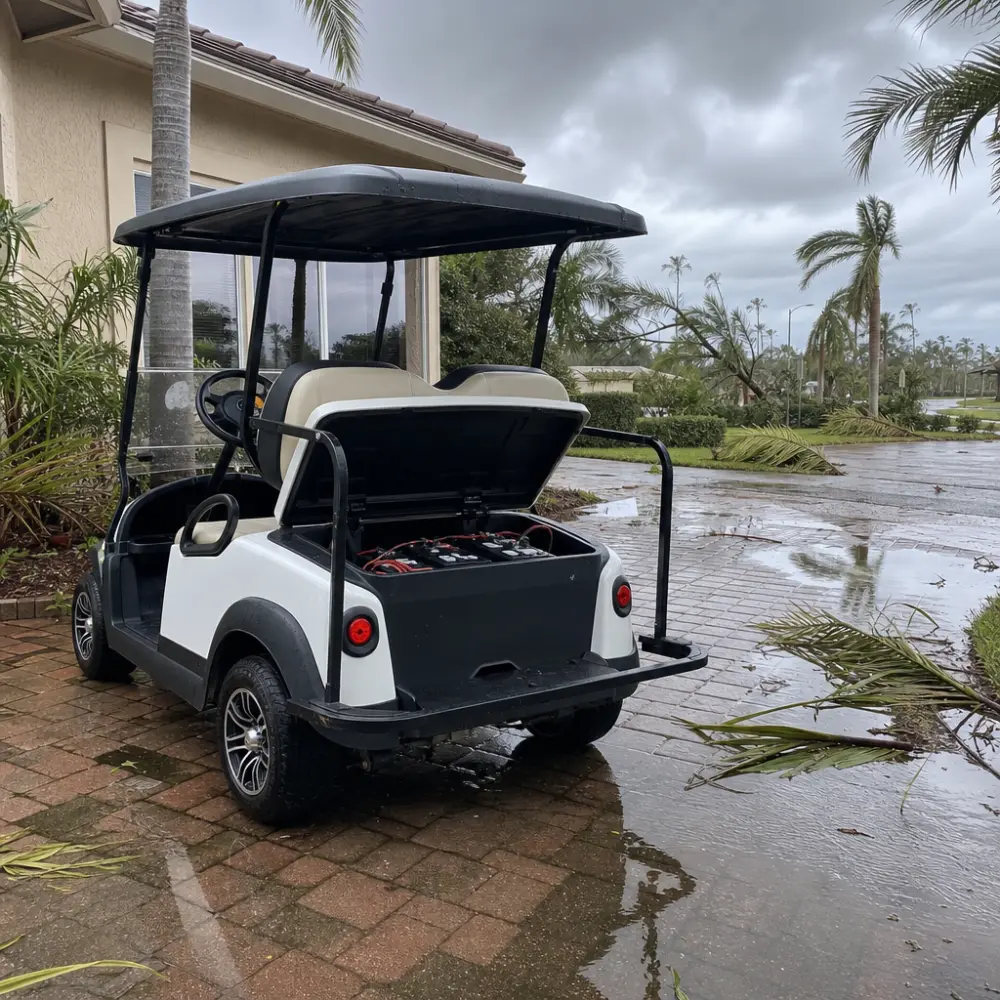
Brakes get adjusted, repaired, and replaced and tires get installed at your home, garage, or fleet lot through Galveston Golf Cart Repair: brake adjustment about $75, shoes and drums $100 to $250, a full overhaul $200 to $400, and tires $75 to $150 each or $300 to $600 for a set of four. The work is usually done in one visit, on-site, anywhere on Galveston Island and the Upper Texas Coast.
Why this island wears brakes and tires differently
Two local realities shape brake and tire wear here, and neither is the mileage story an inland market would tell.
Sand gets into everything that touches the road. Carts crossing to West End beach accesses, running the Seawall’s bike-and-cart lane, or parking on gravel and shell-covered fleet lots pick up fine sand that works into brake drums and wheel bearings the same way road salt would up north. Sand in a drum acts as an abrasive rather than a lubricant, and it glazes brake shoes faster than clean pavement mileage ever would.
Salt air corrodes brake hardware and cables, not just batteries. Cable housings, adjustment linkages, and drum hardware all sit exposed to the same airborne salt that eats battery terminals. A cart that has not been driven hard at all can still have brakes that grab unevenly or a cable that has seized in its housing, because corrosion, not wear, is doing the damage. Every brake job here should cover cable movement and hardware condition, not just the shoes.
UV off open water ages tires faster than sidewall wear would suggest. A tire with plenty of tread can still be checking and cracking on the sidewall, especially on carts stored outside near the Gulf most of the year, and a cracked sidewall is a failure risk at any speed, particularly on a cart carrying passengers on Seawall Boulevard or a beach road.
What a brake job actually involves
- Roll and pedal test. How the pedal feels, whether the cart pulls to one side, and whether the brakes hold on an incline (a real question on the Seawall’s grade up from the beach level).
- Drum inspection. Shoes, springs, and drum surface for wear, glazing from sand, or scoring.
- Cable and linkage check. On electric carts especially, a stiff or corroded cable produces the same symptom as worn shoes, uneven or weak braking, and it is a cheaper fix.
- Adjustment or replacement, whichever the inspection actually calls for, quoted flat before the work starts.
- Test drive to confirm even, firm braking before we leave.
Full detail on symptoms is on the brakes squeal or will not hold page.
Tires: what to watch for here specifically
Tread depth matters less on this island than it does inland, because Gulf-facing UV ages the rubber itself. Check the sidewalls for fine cracking, especially on the sun-facing side of a cart that sits outside. A set that looks fine on tread but shows sidewall checking should be replaced before it fails at speed, particularly on carts that carry passengers regularly, which describes most rental fleet and vacation-property carts on the island. Lifted or low-profile tire setups cost more per tire and are noted on the pricing page.
Rental fleets and multi-cart properties
Brakes and tires are the single most common fleet-maintenance call on this island, because a rental cart doing multiple laps a day between the Strand and the Seawall in season racks up more real mileage in a summer than most homeowner carts see in a year. Scheduled brake-and-tire rounds suit fleet operators and vacation-rental property managers: every cart checked in one visit rather than waiting for individual failures. See the rental fleet maintenance post for how the scheduling works.
What is included
Every brake and tire visit includes the inspection, the work itself, a torque check on wheel hardware, and a test drive before we leave. Corroded cables or hardware found during the inspection get flagged and priced separately rather than bundled silently into the job.
Get a quote
Describe what the cart is doing (pulling, squealing, weak brakes, a specific tire showing wear or cracking) and we can give you a flat number before anyone drives out, with the visit window attached, anywhere on Galveston Island, Jamaica Beach, Tiki Island, and the mainland side, and the repair cost calculator gives you a range now.
Frequently Asked Questions
How much does a brake adjustment cost?
About $75 for a straightforward adjustment. Shoes and drums run $100 to $250, and a full overhaul (shoes, drums, cables, hardware) is $200 to $400, all installed at your home.
Why do brakes wear faster on this island?
Two reasons. Carts running to West End beach accesses and Seawall crossings pick up sand that works into the drum and glazes the shoes, and salt air corrodes cables and adjustment hardware faster than it would inland, which throws adjustments out even on carts that are not driven hard.
How often should tires be replaced here?
Watch for sidewall cracking as much as tread wear. UV off open Gulf water and the Seawall's exposed pavement age rubber faster than shaded inland streets do, so a tire with plenty of tread left can still be unsafe if the sidewall is checking.
Do you service rental fleet carts?
Yes, and brakes and tires are the most common fleet call, since rental carts log more daily mileage in season than almost any homeowner cart. Fleet operators can ask for multi-cart brake and tire rounds.